If you’ve ever pulled a load out of the washer to find a once-white t-shirt now tinted pink, or a sweater that shrank two sizes, you already know why sorting matters. Learning how to sort laundry properly is one of the simplest habits you can build, and it’s the single biggest factor in preventing color bleeding, shrinking, fading, and fabric damage before they happen.
The good news is that sorting doesn’t have to be complicated. Once you understand a few basic principles about color and fabric, it becomes a quick, almost automatic step rather than a chore you dread. This guide walks through exactly how to do it — from color groups to fabric types to reading care labels — so you can wash with confidence every time. And if you ever get to a point where sorting and washing feels like more than you have time for, we’ll also talk about when a laundry service can genuinely help.
Why You Should Sort Laundry Before Washing
Unsorted laundry causes three main problems. The first is dye transfer — darker or brighter items can bleed color onto lighter fabrics, especially in hot water. The second is shrinkage, which happens when delicate or heat-sensitive fabrics get washed on a cycle meant for sturdier items. The third is physical damage, like snags and pilling, caused when rough fabrics (think zippers, buttons, or denim) rub against delicate ones in the same load.
Picture a red towel tossed in with a load of white t-shirts. Within one wash, that towel can leave every white shirt with a faint pink tint that’s nearly impossible to reverse. Sorting takes about two extra minutes before you start a load, and it’s the cheapest insurance you have against ruining clothes you actually like wearing.
How to Sort Clothes for Laundry: The Basics
Most people think sorting laundry just means separating light colors from dark ones. That’s part of it, but it’s only half the picture. Knowing how to sort clothes for laundry really comes down to two dimensions working together: color and fabric.
Before starting any load, it helps to check four things: the color of the item, the fabric type and weight, the care label instructions, and how soiled the item is. The color tells you which group it belongs in. The fabric tells you how it should be washed. The care label tells you the specifics. And the soil level tells you whether it needs its own cycle entirely. The sections below break each of these down.
Sorting by Color vs. Sorting by Fabric — Why Both Matter
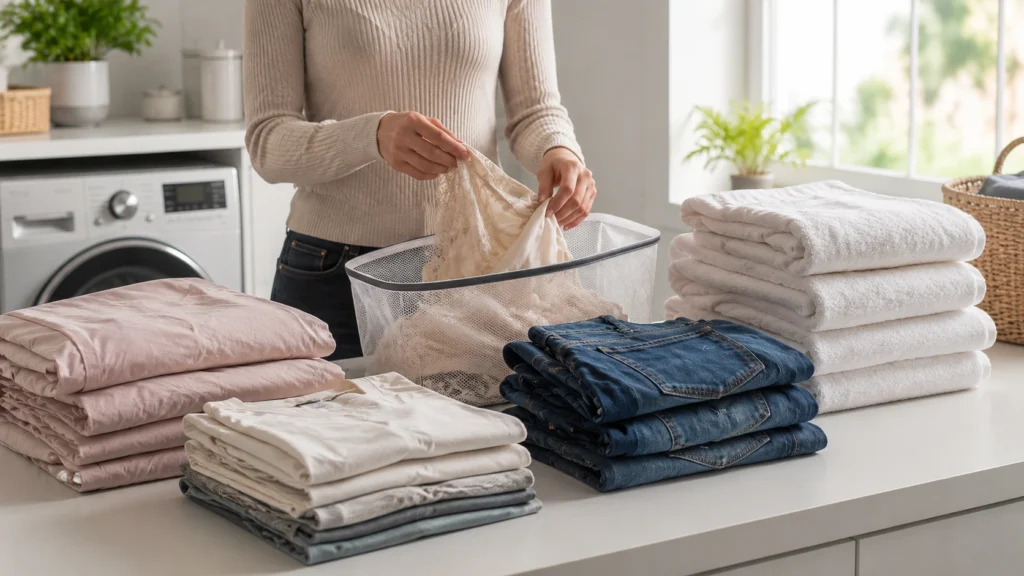
Here’s a scenario worth remembering: two white cotton t-shirts and a white lace top are all technically “white,” but they shouldn’t go in the same load. The lace needs a gentle cycle and cold water, while the cotton shirts can handle a regular wash. Color sorting alone would put them together and risk damaging the lace.
The same logic applies in reverse. Dark denim jeans and a dark silk blouse are both “dark,” but denim is heavy and can rough up delicate fabric in the wash. Color sorting prevents dye transfer. Fabric sorting prevents physical damage. You need both to protect your clothes fully.
How to Sort Laundry by Color
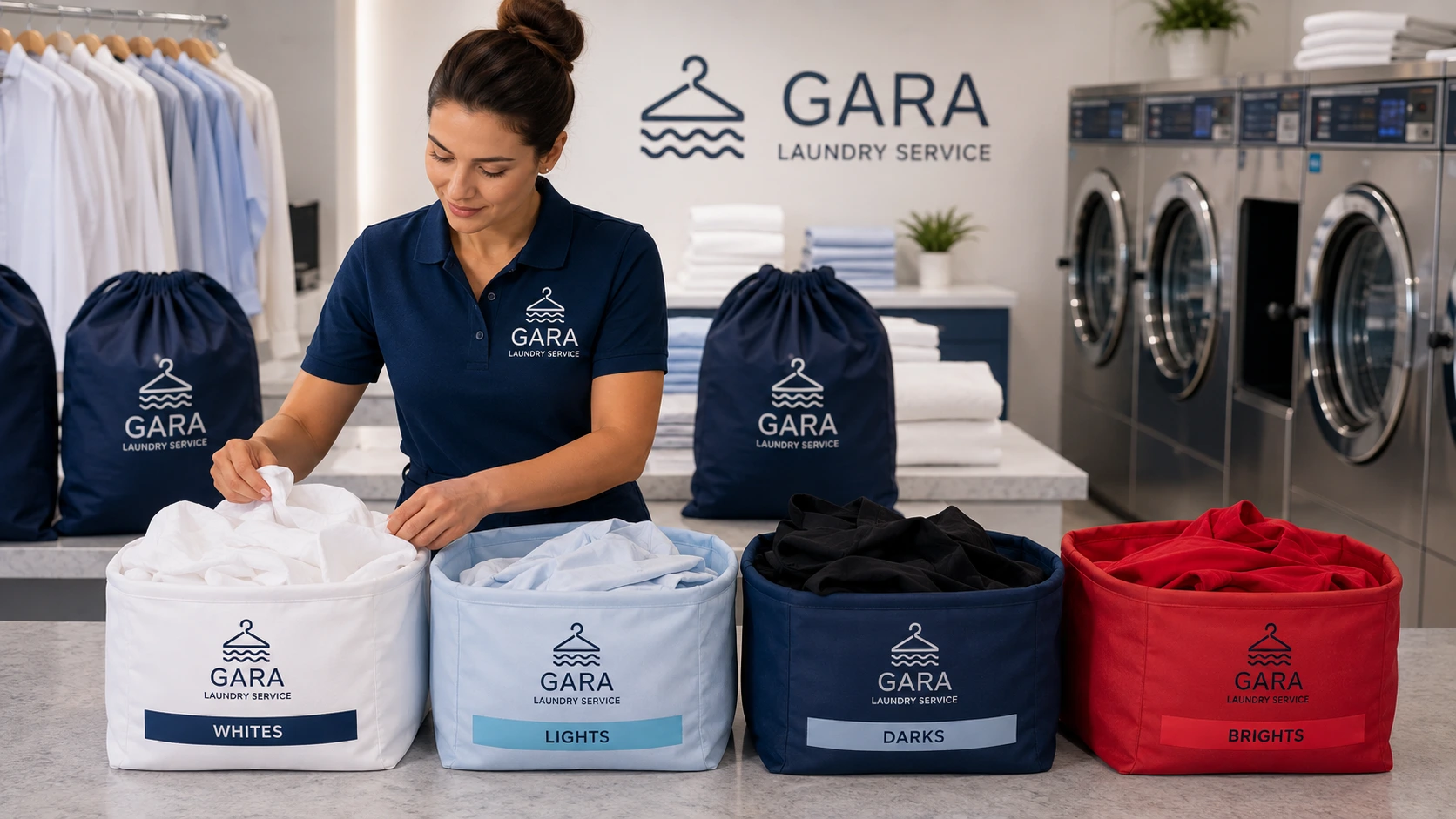
Once you’ve got fabric type in mind, color is the next layer — and understanding how to sort colors for laundry properly starts here. Rather than just splitting clothes into “light” and “dark,” it helps to think in four practical groups based on color intensity: whites, lights, darks, and brights. Grouping this way — rather than a strict two-pile system — is what actually prevents most bleeding and dulling problems.
Whites vs. Lights vs. Darks
Whites are undyed fabrics — think plain white shirts, socks, and sheets. These can typically handle hot water and bleach-safe detergents, which helps keep them bright over time.
Lights include pastels and light prints. Even though they seem close to white, washing them separately from true whites prevents a subtle dulling effect that builds up over repeated washes.
Darks cover navy, brown, dark green, and similar shades. These carry real dye-transfer risk and generally do best in cold water to help colors stay put.
Bright and Highly Pigmented Colors
Reds, oranges, hot pink, and purple are some of the most likely colors to bleed — and not just on the first wash. Highly saturated dyes can continue to release small amounts of color for several washes. It’s worth keeping brights in their own group, or at least grouping them with other similarly bright colors, for the first three to five washes. A color-catcher sheet dropped into the load is a low-effort way to add extra protection here.
Black and Dark Clothing
Black clothing deserves its own category rather than being lumped in with “darks” generally. Washing black items separately helps prevent fading and stops lighter lint from other dark fabrics settling onto black material. Washing black clothes inside-out in cold water is a simple way to help the color last longer.
Sorting by Fabric Type and Weight
Fabric weight affects more than just how gentle a wash cycle needs to be — it also affects spin speed and how much water a garment absorbs, which is why mixing wildly different fabric weights in one load rarely turns out well.
Towels, Bedding, and Bulky Items
Towels and bedding should generally be washed on their own. They shed lint, absorb a disproportionate amount of water, and can leave lighter clothing items underclean simply because the detergent and water get soaked up by the bulkier items first. If you’re in a warmer, humid climate, beach and pool towels in particular may need more frequent washing due to sand, sunscreen, and chlorine exposure.
Delicate Fabrics
Silk, lace, mesh, and fine knits need a gentler cycle — cold water, low spin, and ideally a mesh laundry bag for extra protection. These fabrics shouldn’t be washed alongside anything with zippers, hooks, or heavier material, since the friction can cause snags or tears.
Heavy Fabrics Like Denim
Denim sheds both dye and lint, and its weight can throw off the balance of a load containing lighter items. Washing denim inside-out, in cold water, and separately from delicates and light-colored clothing helps preserve both the denim and everything around it.
Clothes With Special Washing Instructions
Some garments need to be pulled out of the general sorting process entirely. Wool sweaters, athletic wear with spandex, anything with sequins or delicate trim, and swimwear often fall into this category. These items typically call for cold water, a gentle cycle, or hand-washing altogether — and anything labeled dry-clean only is best left to a proper Dry Cleaning Service rather than risking it in a home wash.
Items That Should Be Washed Separately
A few categories are worth isolating on their own every time: brand-new dark or bright garments (dye risk), heavily soiled items like gym clothes or work uniforms (which need more detergent and shouldn’t dilute a lighter load), and anything with loose embellishments that could snag other fabrics.
How to Handle New Clothes That May Bleed Dye
New dark or brightly colored garments are the most common source of laundry mishaps. A simple way to test for dye bleeding is the damp paper towel test: dampen a corner of the fabric and press it against a white paper towel. If color transfers, that item needs to be washed alone for its first one or two washes. Cold water significantly reduces the risk either way.
Reading Care Labels: Why Color Sorting Alone Isn’t Enough
Two shirts can be the exact same shade of blue and still require completely different care — one might be machine-washable in warm water, while the other needs cold water and air drying only. Care labels typically indicate the recommended water temperature, whether bleach is safe to use, tumble-dry restrictions, and whether an item is dry-clean only.
Color sorting protects against dye transfer, but it says nothing about how a fabric will react to heat, agitation, or drying. Reading the label is what protects the garment itself — which is why relying on color sorting alone leaves a gap that eventually leads to a shrunk or damaged item.
How Water Temperature Affects Different Loads
Water temperature plays a bigger role than most people realize. Hot water works well for whites, heavily soiled items, and bedding, when the fabric allows it, since heat helps lift dirt and sanitize. Warm water suits moderately soiled everyday clothing. Cold water is the safest choice for darks, brights, and delicates, since it minimizes dye transfer and fabric stress. As a bonus, cold water washing also uses less energy and is gentler on fabric over time, which means clothes last longer overall.
Do Clothes Always Need to Be Separated Strictly by Color?
Not always — and this is where a lot of laundry advice gets overly rigid. A load of mixed cool-toned darks, like navy, black, and dark green, is generally safe to wash together. The real risk factors are brand-new garments, highly saturated or bright colors, and high contrast, such as pairing white with anything dark.
A simple rule of thumb: keeping whites separate from everything else is non-negotiable, but darks and mid-tones have more flexibility than people assume. The goal isn’t perfection — it’s understanding which combinations carry real risk and which don’t.
Common Laundry-Sorting Mistakes
Even once you understand how to sort laundry in theory, a few mistakes account for most laundry mishaps in practice, and nearly all of them are easy to avoid once you know to watch for them:
- Mixing whites with dark colors
- Washing delicate fabrics alongside heavy items like denim or anything with zippers
- Ignoring care labels and assuming color sorting alone is enough
- Overloading the washing machine, which prevents clothes from moving freely and detergent from rinsing out properly
- Washing new dark or bright garments with lighter clothing before testing for bleeding
- Using the wrong water temperature for the fabric type or soil level
What to Do When You Have a Small Laundry Load
Strict category sorting isn’t always realistic with a small load — you’re not going to run four half-empty machines for a handful of items. In these cases, a reasonable compromise is grouping by “safe to combine”: light and white items together, for example, as long as nothing is brand new or brightly colored. Another option is holding smaller loads for a couple of days to combine into one fuller, properly sorted load. And if sorting every single load isn’t realistic given your schedule, that’s exactly the kind of task a Wash and Fold Laundry Service is built to handle — done correctly, every time, without you having to think about it.
How Often Different Types of Laundry Should Be Washed
As a general reference: towels typically need washing after about three uses, sheets weekly, everyday clothing after each wear or every few wears depending on the fabric, activewear after every use, and delicates less frequently, with spot-cleaning in between when possible. In warmer, more humid climates, sweat and odor can build up faster, which often means everyday clothing needs washing more frequently than it would in a cooler climate.
How to Sort Laundry Step by Step
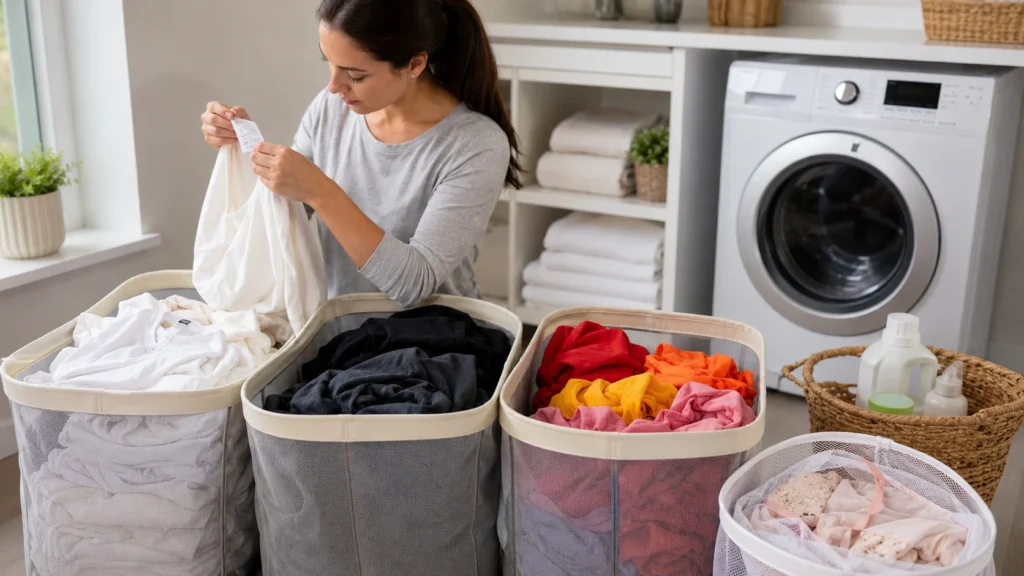
If you want a simple, repeatable process for how to sort laundry step by step, follow these steps every time:
- Empty pockets and check for loose items like tissues, coins, or pens.
- Check care labels and pull out anything requiring special handling.
- Separate items by color group: whites, lights, darks, brights, and blacks.
- Within each color group, separate further by fabric weight and type — delicates, everyday fabrics, and heavy items.
- Test new dark or bright garments for dye bleeding if you’re unsure.
- Match the water temperature to the load’s color and fabric needs.
- Avoid overloading the machine — leave enough room for clothes to move freely.
This process takes just a few minutes once you get used to it, and it’s enough to prevent the vast majority of common laundry mishaps.
A Simple Laundry-Sorting Checklist
If you’re still getting the hang of how to sort laundry colors, here’s a quick-reference checklist worth bookmarking or saving for future loads:
- ✅ Whites
- ✅ Lights
- ✅ Darks
- ✅ Bright colors
- ✅ Delicates
- ✅ Towels/bedding
- ✅ Heavy fabrics (denim, etc.)
A Simple Laundry-Sorting Routine for Beginners
If you’re new to doing your own laundry, the easiest way to build the habit of how to sort laundry consistently is to make sorting passive rather than a separate task. Keeping two or three hampers around your home — one for lights, one for darks, and one for delicates — means clothes are already sorted by the time laundry day arrives. Consistency matters far more than perfection here; even a rough sort each week will prevent most of the common mishaps covered above.
When a Laundry Service in Miami Makes Sense
To be honest, most people can sort and wash their own laundry just fine using the guide above. But there are real situations where a laundry service in Miami becomes genuinely useful rather than just a convenience:
- Busy households juggling work schedules, commutes, and family responsibilities, where laundry keeps getting pushed to the bottom of the list
- Large families generating a high volume of laundry every week, sometimes enough to benefit from a Commercial Laundry Service rather than a standard home-sized load
- Professionals who simply don’t have a free block of time for washing, drying, sorting, and folding
- Large one-off loads, like after a move, a trip, or a seasonal wardrobe changeover
- Delicate or special-care garments that people are hesitant to wash themselves for fear of damaging them
- Bulky items like bedding and comforters that take up significant machine capacity and time
If any of these sound familiar, that’s exactly the kind of situation Gara Laundry Service was built for.
The Benefits of Outsourcing Your Laundry
Handing laundry off to a professional service isn’t just about saving time, though that’s certainly part of it — especially in a city where commutes and schedules can eat up a lot of the day. It also means consistent, correct sorting and care every single time, without the guesswork of figuring out a new fabric or worrying about a bright new garment bleeding. Professional-grade equipment handles bulky items like bedding and comforters more effectively than most home machines can. And for anyone without time to drop off and pick up loads themselves, Laundry Pickup and Delivery removes that step entirely.
Gara Laundry Service offers exactly this kind of support — from wash and fold, to pickup and delivery, to dry cleaning for anything that needs special care. The goal isn’t to replace the habit of doing your own laundry well; it’s to be there for the weeks when life makes that harder than usual.
Conclusion — Getting Sorting Right, Every Time
Sorting laundry well comes down to a few consistent habits: grouping by color, grouping by fabric weight, checking care labels, and matching water temperature to the load. Once these become second nature, most of the common laundry mishaps — bleeding, shrinking, fading, and snagging — simply stop happening.
Keep the checklist and step-by-step process handy for the next few loads until it becomes automatic. And on the weeks when sorting and washing everything yourself just isn’t realistic, Gara Laundry Service is there as an easy, reliable option — no guesswork required.
Frequently Asked Questions
How should I sort laundry by color?
Group clothes into whites, lights, darks, and brights rather than just light versus dark. This finer grouping prevents both dulling over time and dye transfer from more saturated colors.
What colors can be washed together?
Similar-toned mid and dark colors, like navy, black, and dark green, can generally be washed together safely. Whites should always be kept separate, and brand-new or highly saturated colors are best washed alone at first.
Should I separate dark clothes from black clothes?
It’s recommended, mainly to prevent fading and to stop lint from other dark fabrics settling onto black clothing. That said, if items are well-worn and no longer prone to bleeding, this rule has some flexibility.
Do I need to sort laundry every time?
Ideally, yes, but it doesn’t need to be complicated. For small loads, focus on avoiding high-risk combinations — like whites with darks, or new bright items with lighter clothing — rather than sorting into every possible category.
Should towels be washed separately?
Yes. Towels shed lint and absorb a large amount of water, which can leave both the towels and any clothing washed alongside them undercleaned.
Can a laundry service sort and wash clothes for me?
Yes. Gara Laundry Service handles sorting, washing, and care according to fabric type and color automatically, which is especially useful for busy households, large families, or anyone with delicate items they’d rather not risk washing themselves.