If you’ve ever wondered how much does dry cleaning a dress cost, you’re not alone — it’s one of the most common questions people have before they ever walk into a dry cleaner, and the honest answer is: it depends. The price of dry cleaning a dress isn’t a single fixed number. It shifts based on the fabric, the dress style, the condition it’s in, and where you live.
That might not be the simple answer you were hoping for, but it’s the accurate one — and understanding why prices vary will actually help you budget more confidently and avoid surprises. In this guide, we’ll walk through what typically drives dry cleaning costs, how pricing tends to differ across dress types (including wedding gowns), what’s usually included in a professional cleaning service, and how to compare providers so you get a fair, accurate quote. Whether you’re dealing with an everyday sundress or a beaded evening gown, by the end of this article you’ll know exactly what questions to ask and what to expect.
At Gara Laundry Service, we believe informed customers make better decisions — so let’s break it all down.
How Much Does Dry Cleaning a Dress Cost, On Average?
For a standard, everyday dress made of common fabric with no major stains or embellishments, dry cleaning tends to sit toward the lower end of the pricing spectrum compared to more elaborate garments. This baseline price is really just a starting point — it assumes a relatively simple, straightforward cleaning job.
The moment you introduce variables like delicate fabric, heavy beading, a long train, or a stubborn stain, that starting price begins to climb. It’s also worth knowing that pricing can differ noticeably depending on where you’re located — dry cleaning in a major city often costs more than in a smaller town, simply due to differences in overhead and labor costs.
Rather than fixating on a single number, it’s more useful to think of dry cleaning pricing as a range that gets narrowed down once a cleaner actually inspects your specific dress. That inspection is where the real, accurate pricing conversation begins — which is exactly what we’ll cover next.
It’s also worth noting that the average dry cleaning cost you find online is often a national or regional figure, not necessarily what you’ll pay locally. Treat published averages as a general reference point rather than a guarantee.
Factors That Affect Dress Dry Cleaning Cost
Several specific factors combine to determine what you’ll actually pay. Understanding these can help you anticipate cost before you even drop off your dress.
- Fabric type. Natural fibers like silk and wool often require gentler solvents and more careful handling than sturdier synthetic blends, which can affect price. Delicate fabrics generally take more time and expertise to clean safely.
- Size and volume of material. A floor-length gown simply uses more cleaning solvent, more pressing time, and more handling than a knee-length dress — and pricing usually reflects that.
- Embellishments and trim. Beading, sequins, lace overlays, and appliqués often need to be hand-finished or specially protected during cleaning, which adds labor and, in turn, cost.
- Stains and their severity. A fresh, mild stain is usually far easier (and cheaper) to treat than a stain that’s set in, unidentified, or oil-based. The more complex the stain removal, the more it may add to your total.
- Construction and lining. Dresses with multiple fabric layers, structured boning (common in formalwear), or delicate linings require more careful, hands-on handling.
- Turnaround time requested. Standard processing is typically more affordable than rush or same-day service — we’ll cover this in more detail later.
- The cleaner’s expertise and equipment. Some dry cleaners specialize in delicate, couture, or bridal garments and price accordingly. That’s not necessarily a downside — it often reflects the specialized care your dress may need.
Because these factors interact with each other, two dresses that look similar on a hanger can end up with very different price tags once a professional actually examines the fabric, condition, and construction.
Dry Cleaning Cost by Dress Type
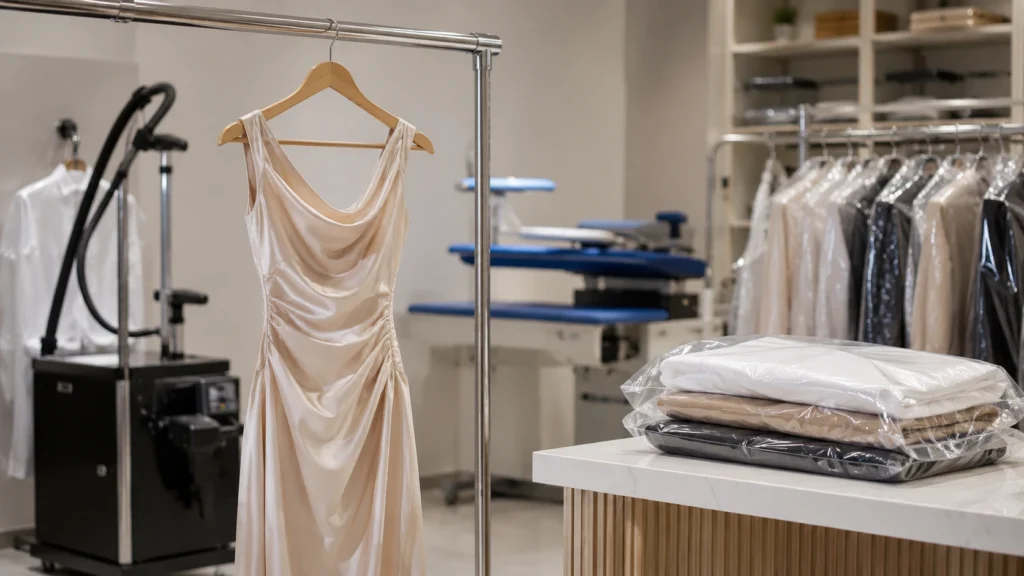
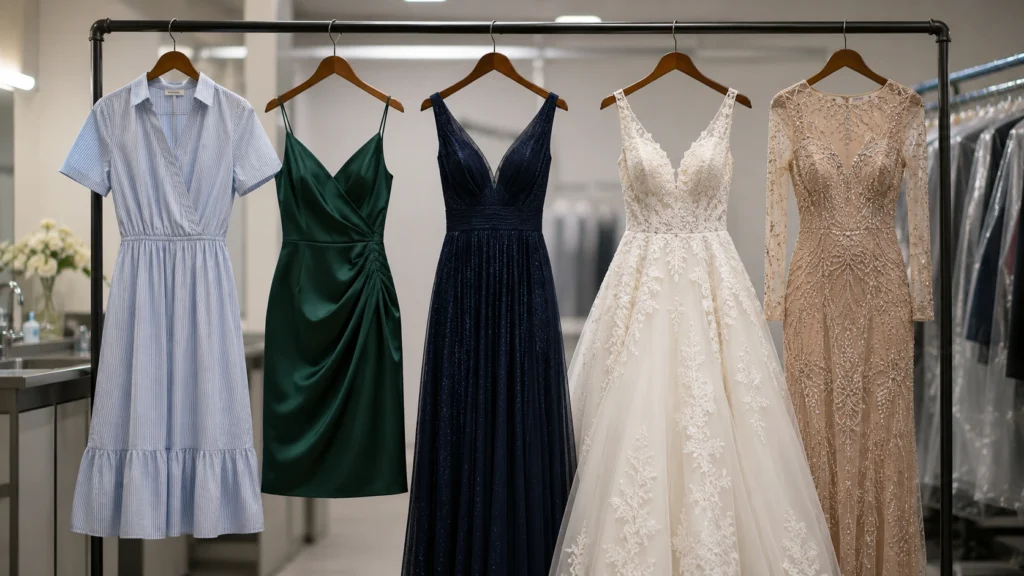
Not all dresses are created equal when it comes to cleaning — and pricing reflects that. Here’s a general breakdown by category so you can get a sense of where your dress might fall.
Everyday & Casual Dresses
Casual, everyday dresses made from cotton, cotton blends, or simple polyester fabrics are typically the most affordable dresses to dry clean. They usually have minimal lining and little to no embellishment, which keeps the cleaning process relatively straightforward. That said, even a simple cotton dress can cost more to clean if it has delicate embroidery, a tough stain, or trim that requires extra care.
Formal Dresses & Cocktail Attire
Formal and cocktail dresses generally fall into a moderate pricing tier. These garments often have more structured fabric, partial lining, and sometimes light beading or sequin detail, all of which push the price above what you’d expect for a casual dress. Fitted or tailored pieces may also require more careful pressing to preserve their shape.
Evening Gowns
Evening gowns tend to sit in a higher-cost category. This is largely driven by fabric weight — think silk, satin, chiffon, or velvet — combined with length and often more intricate detailing. Gowns with trains or heavy beadwork may require specialized equipment or extra hands-on attention, which is reflected in the price.
Wedding Dresses
Wedding dresses are typically the most expensive category to dry clean, and for good reason — we’ll walk through exactly why in the dedicated section below.
Delicate or Specialty Fabrics
Dresses made from silk, velvet, chiffon, lace, or featuring heavy sequins and beading — along with vintage or heirloom garments — generally require slower, more meticulous cleaning processes. There’s more risk involved (dye bleeding, fabric damage, loose trim), so pricing tends to reflect the extra time and specialized expertise these fabrics demand.
Wedding Dress Dry Cleaning Cost
Wedding dresses occupy their own pricing category, and it’s easy to see why once you consider what’s actually involved. These gowns are often large, made of multiple fabric layers, and adorned with delicate details like lace, beading, or tulle. On top of the physical complexity, there’s also the emotional and often heirloom value of the dress — which means cleaners typically take extra precautions that go beyond a standard dry cleaning process.
Because pricing for wedding dress cleaning varies significantly based on size, fabric, and condition, it’s best to treat any published number as a rough estimate until a professional has actually inspected your dress. What’s more useful to know upfront are the types of services commonly offered alongside standard cleaning:
- Preservation boxing, which stores the dress in acid-free materials to help protect it long-term.
- Stain-specific treatment, especially for common wedding-day culprits like champagne, grass stains, or makeup.
- Storage guidance, including how and where to keep the dress once it’s cleaned.
One practical tip: many brides choose to have their dress cleaned shortly after the wedding, rather than waiting. Stains — even ones that aren’t visible yet — can set over time, making them harder and more costly to remove the longer they sit. At Gara Laundry Service, we recommend addressing wedding dress cleaning sooner rather than later for exactly this reason.
What’s Typically Included in Professional Dry Cleaning
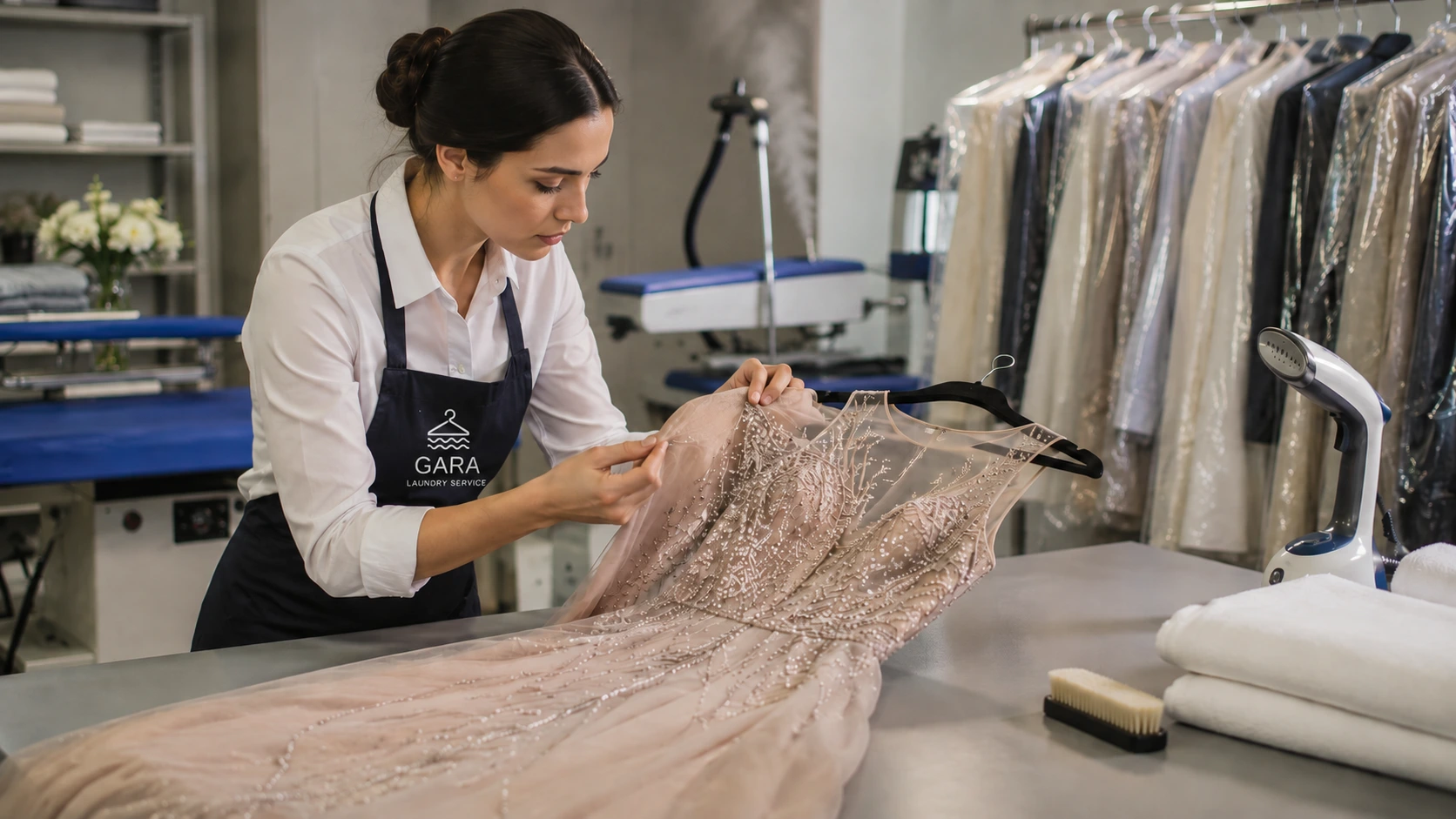
It helps to know what actually happens to your dress once you hand it over. A professional dry cleaning process generally includes:
- Initial inspection — checking for stains, damage, loose trim, or missing buttons before cleaning begins.
- Stain pre-treatment — for common, mild stains, this is usually a standard part of the process rather than an added expense.
- The cleaning process itself — using solvents and techniques appropriate to the specific fabric.
- Pressing and finishing — restoring the dress’s shape and removing wrinkles.
- A final quality check — making sure the garment looks right before it’s returned to you.
- Packaging — standard poly bagging is typical for most orders, while specialty boxing (such as wedding dress preservation boxes) is usually offered as a separate, optional service.
Knowing this process can help demystify what you’re actually paying for — it’s not just “cleaning,” it’s a multi-step process designed to protect your garment. Professional dry cleaning services also typically include a level of quality control and accountability that at-home cleaning simply can’t match, especially for delicate or valuable dresses.
Additional Charges to Watch For
Most of the time, standard dry cleaning covers what a typical dress needs. But there are a few situations where additional charges may apply — and knowing about them ahead of time means fewer surprises, not more fees:
- Stain removal beyond standard treatment. Heavily set-in, oil-based, or unidentified stains sometimes require extra time or specialized products.
- Delicate or specialty fabric handling. Silk, velvet, lace, or beaded garments often involve slower processing, which can carry a surcharge.
- Alterations or minor repairs. Loose buttons, small tears, or minor hem issues are sometimes offered as an add-on service rather than being automatically included.
- Packaging and preservation boxing. Especially relevant for wedding dresses or garments being stored long-term.
- Rush or same-day service. Faster turnaround typically comes with a premium, since it requires prioritizing your garment ahead of others in the queue.
None of this is meant to be a warning — it’s simply useful context so you can ask the right questions and avoid unexpected costs.
Choosing a Local Dry Cleaner: What to Look for Beyond “Near Me”
When you’re searching for “dry cleaning near me,” it’s tempting to just go with whichever option pops up first. But proximity alone doesn’t tell you much about quality, and for something as important as a formal dress or wedding gown, that distinction matters.
Instead, consider looking for:
- Experience with your specific fabric or dress type. A cleaner well-reviewed for handling silk or beaded garments is a safer bet than a generalist for a delicate piece.
- Reviews that mention formalwear, gowns, or wedding dresses specifically — not just general laundry service.
- Clear turnaround time expectations, including whether rush service is available if you need it.
- Guarantees or insurance policies — what happens if something goes wrong during the cleaning process?
- Specialty services, like wedding dress preservation, which can be a meaningful differentiator between local dry cleaners.
At Gara Laundry Service, we encourage customers to ask these kinds of questions — a little research upfront can save a lot of stress later, especially with sentimental or expensive garments.
How to Compare Dry Cleaner Prices and Get an Accurate Quote
Once you’ve narrowed down a few local options, comparing dry cleaner prices fairly takes a bit more than just asking “how much?” over the phone. Here’s how to get a quote you can actually rely on:
- In-person inspection tends to produce more accurate pricing than a phone-only estimate, since the cleaner can actually assess the fabric, condition, and any stains firsthand.
- Ask for itemized pricing — separating base cleaning costs from stain treatment, rush fees, or specialty handling makes it much easier to compare providers apples-to-apples.
- Request a written quote or order slip before cleaning begins, so there’s a clear record of what was agreed upon.
- Remember that the cheapest quote isn’t always the best value. If a lower price excludes services your garment actually needs — like proper handling for beading or lace — it may not be the right choice, even if it looks appealing upfront.
A little extra diligence here goes a long way, especially for dresses with sentimental or financial value.
Tips to Reduce Dry Cleaning Costs Without Compromising Care
Dry cleaning doesn’t have to be a major recurring expense if you take a few proactive steps:
- Store dresses properly between wears. Breathable garment bags and dry, cool storage areas help prevent the buildup of odors or fabric stress that can lead to more frequent cleanings.
- Address spills or spots promptly — but let the professionals handle removal. Informing your cleaner about a fresh stain right away is far more effective (and safer for delicate fabrics) than attempting to treat it yourself at home.
- Bundle multiple garments into a single visit if your cleaner offers any kind of volume-based savings.
- Save dry cleaning for garments that actually need it. Everyday, non-delicate items are often better suited to a wash-and-fold service, reserving dry cleaning for pieces that truly require it.
- Ask about seasonal promotions or loyalty programs, which many cleaners — including Gara Laundry Service — offer periodically.
None of these tips require cutting corners on care. They’re simply smart habits that can meaningfully reduce how often (and how much) you’re paying for professional cleaning.
Conclusion
At the end of the day, there’s no single answer to “how much does dry cleaning a dress cost?” — and now you know why. Fabric, dress type, embellishments, stains, and even your location all play a role in the final price. What matters most isn’t memorizing a number, but understanding the factors that drive pricing so you can ask the right questions and know what to expect.
Whether you’re caring for an everyday dress, a formal gown, or a wedding dress you want to preserve for years to come, the safest path to an accurate price is always a direct inspection from a cleaner you trust. A little research into a cleaner’s experience, reviews, and process goes a long way toward protecting garments that matter to you — financially and sentimentally.
If you’re ready to find out exactly what your dress needs, Gara Laundry Service is happy to take a look and walk you through your options — no pressure, just honest guidance.
Frequently Asked Questions
How much does dry cleaning a dress cost?
It depends heavily on the dress type, fabric, and condition. Simple, everyday dresses tend to cost less, while gowns, wedding dresses, and delicate fabrics cost more. The most accurate way to know is to have the dress inspected directly by a professional cleaner.
Is dry cleaning a wedding dress more expensive than other dresses?
Generally, yes. Wedding dresses are often larger, made of multiple delicate layers, and require extra careful handling — all of which typically make them the highest-cost category of dress to clean.
Why do some dry cleaners charge more than others for the same dress?
Pricing differences often come down to expertise, equipment, location, and the specific processes a cleaner uses for delicate or specialty fabrics. A cleaner specializing in bridal or couture garments may charge more, but that price often reflects a higher level of care.
Does removing stains cost extra?
Mild, common stains are usually included in standard cleaning. However, heavily set-in, oil-based, or unidentified stains may require additional treatment, which can add to the total cost.
How long does dry cleaning a dress usually take?
Turnaround time varies by cleaner and by garment complexity, but standard service is typically the most affordable option. If you need your dress back quickly, ask about rush or same-day service — just know it usually comes at a premium.
Can delicate or beaded dresses always be dry cleaned safely?
In most cases, yes — as long as the cleaner has experience with that specific fabric or embellishment type. This is exactly why it’s worth asking about a cleaner’s experience with delicate garments before dropping off a special dress.
How do I get an accurate price quote before dropping off my dress?
The most reliable way is an in-person inspection, since a cleaner can assess fabric, stains, and construction directly. Ask for an itemized quote in writing so you know exactly what’s included.
Are there ways to save money on dry cleaning without risking damage?
Yes — proper storage, prompt (professional) stain treatment, bundling garments, and reserving dry cleaning for items that truly need it are all effective, low-risk ways to manage costs over time.